
Casino Dice Games in Australia: Rules and Legality
 Available in AU
Casino dice can refer to several kinds of games, but the rules and the legal status of an online service are separate questions.

- What “Online Casino Dice” Means in Australia
- Casino Dice: The Basics Behind the Game
- How to Follow a Casino Dice Game
- Different Casino Games That Use Dice
- Craps and the Dice on the Table
- Reading Casino Dice Rules Before You Play
- What Makes a Game a Casino Dice Game?
- Dice-Game Strategy and the Limits of Patterns
- What to Expect from Live Casino Dice
- Games Where You Roll the Dice
What “Online Casino Dice” Means in Australia
Casino dice can describe a game built around dice, whether it is played at a physical table or shown through a digital interface. The distinction matters in Australia: discussing how a dice game works is not the same as offering an online casino service. A phrase such as “online casino dice” identifies a type of game, but it does not change the legal position of the service behind it.
Under the Interactive Gambling Act 2001, it is illegal for operators to provide real-money online casino games to people located in Australia. The restriction covers casino-style games, including table games, as well as poker and pokies. Dice games offered for real money through an online casino fall within that prohibited category. An offshore licence does not make the service lawful to offer to Australians.
That rule concerns the operator, not the person using the service. Players are not criminalised for accessing offshore gambling sites. This does not mean those sites are authorised in Australia, or that they are reliably accessible. Offshore operators may accept Australian payments while operating under licences issued elsewhere, but that does not give them permission to provide prohibited casino gambling to people in Australia.
Choosing a dice casino in Australia means checking what is actually known about its licensing, deposit terms or payouts before you play. Use these concise verdicts to see which details are available for each option.
License: Curacao eGaming OGL/2024/923/0383 (Antillephone N.V.) · Min. deposit: A$30 WinSpirit Casino lists a Curacao eGaming licence issued through Antillephone N.V. Its minimum deposit is A$30.
License: Curacao Gaming Control Board OGL/2023/174/0082 (Dama N.V.) SpinsUp lists a Curacao Gaming Control Board licence held by Dama N.V. The available details identify its licensing, but do not specify deposit or payout terms.
License: Curacao eGaming (Hollycorn N.V., since 2017) · Min. deposit: A$20-30 (depends on the offer) Playfina Casino is operated by Hollycorn N.V., with a Curacao eGaming licence noted since 2017. Its minimum deposit is A$20–30, depending on the offer.
License: Curacao, operated by Dama N.V. 7Bit Casino is operated by Dama N.V. under a Curacao licence.
License: Curacao (operating since 2017) · Min. deposit: A$20 Uptown Pokies has operated since 2017 and lists a Curacao licence. Its minimum deposit is A$20.
License: Curacao Gaming Authority (Jumpman Gaming Ltd) DragonSlots Casino lists a Curacao Gaming Authority licence and is operated by Jumpman Gaming Ltd.
License: Curacao Gaming Control Board JustCasino lists a Curacao Gaming Control Board licence. No deposit or payout details are provided here.
Payout speed: crypto under 1 hour, PayID 1-3 business days · Min. deposit: A$20 (A$30 to qualify for the bonus) Ricky Casino lists crypto payouts in under an hour and PayID payouts in 1–3 business days. The minimum deposit is A$20, or A$30 to qualify for the bonus.
Payout speed: crypto ~90 minutes, fiat 1-5 days · Min. deposit: A$30 Kingmaker lists crypto payouts at around 90 minutes and fiat payouts in 1–5 days. Its minimum deposit is A$30.
License: Curacao · Min. deposit: A$20 (POLi) Lucky Dreams lists a Curacao licence and a minimum deposit of A$20 via POLi.
The practical effect is that availability and legality are separate questions. A website might load, or its games might be described as available to Australians, without the operator being allowed to offer those services here. Access can also be interrupted by enforcement action. So a discussion of casino dice online should be understood as a description of a game category, not an endorsement or an indication that real-money online play is lawful in Australia.
ACMA’s role
The Australian Communications and Media Authority (ACMA) oversees compliance with federal interactive gambling rules and enforces the Interactive Gambling Act. When a website provides prohibited gambling services or advertises them to people in Australia, ACMA can ask Australian internet service providers to block access to it. Blocking is one part of the enforcement response; it explains why an offshore gambling site may become inaccessible even if it previously opened.
ACMA reports that, following enforcement action, it has blocked more than 1,455 illegal gambling and affiliate websites since November 2019. The agency also reports that more than 210 illegal services have left the Australian market since it began enforcement in 2017. There is a discrepancy in published totals for withdrawals: another reported figure is more than 190 services since 2017. The figures should not be collapsed into a single precise count; both accounts describe enforcement that has led services to withdraw.


This context is relevant to searches for a casino dice game online because the format of a game does not sit outside the law governing the service. A dice table presented on a screen remains an online casino game when it is offered for real-money gambling. Calling it a game, a table, or a digital experience does not create a separate legal category.
The same distinction helps avoid confusing information with promotion. A neutral account can explain what casino dice means, how it differs from other uses of dice, or what a digital presentation involves. It should not direct Australians to an offshore casino, present access as an approved option, or frame the existence of a game as permission to play it online for money. In Australia, the law restricts the operator’s provision of that service; the wording used to describe the game does not alter that restriction.
If you encounter claims that an offshore site is “available” to Australian players, read that as a statement about access or marketing, not proof that the service is lawful here. ACMA’s blocking powers and enforcement record show that offshore gambling websites are not simply treated as ordinary local entertainment. The relevant distinction is straightforward: casino dice can be discussed as a subject, while real-money online casino services remain prohibited for operators offering them to people in Australia.
Legal Warning
Under the Interactive Gambling Act 2001, it is illegal for operators to provide real-money online casino games to people located in Australia.
Casino Dice: The Basics Behind the Game
Casino dice games use dice to produce outcomes that determine what happens in a round. The dice may be physical objects handled at a table or digital representations generated by software. Either way, the important point is the same: a result comes from the game’s defined method of producing and evaluating a roll, not from the appearance of the dice or a player’s sense of what they might show next.
A die has marked faces. When it is rolled, one face ends uppermost; when dice are used together, the game may consider their faces separately, combine them into a total, or assess a particular arrangement. The rules decide which of these details matters. Two games can use dice and still treat the same roll differently, so knowing that a game involves dice does not tell you how its outcomes work.
The language of a round
A roll is the event that produces the dice result. An outcome is the result as interpreted under the game’s rules. The outcome might be based on a single face, a combined total, or a condition involving more than one result. These terms sound straightforward, but the distinction matters: the roll is what the dice show, while the outcome is what the game says that showing means.
A wager is an amount staked on an outcome or condition. A game may offer different places or options for making wagers, but those options do not necessarily have equal terms. The relevant rules explain what each one predicts and how it is settled. Before considering any wager, you would need to understand what result qualifies, what counts as a loss, and whether the game treats the result in any additional way.


A round is a unit of play. It may involve one roll or a series of rolls, depending on the game. Some rounds end as soon as a defined result appears; others continue until a stated condition is met. This means the word “roll” does not always mean the whole round is over. The game’s structure determines when a result is final and when another roll belongs to the same round.
Chance, equipment and presentation
Dice are designed to produce a range of possible results, but a roll is not a message about what will happen next. A face that has appeared recently does not, by itself, make another face due. In a digital version, software supplies the result rather than a physical throw; in a live presentation, a camera may show dice being handled and rolled. Those differences affect how the game is presented, not the basic need to understand how results are evaluated.
The equipment and interface can make a game look more complicated than its underlying idea. A physical table may have marked areas for different wagers, while a screen may use buttons, labels or a betting layout. These are ways of displaying choices. They do not replace the rules, and a prominent label is not enough to establish what a choice means. The decisive details are the conditions attached to it and the way the game settles it.
Dice are physical objects that can be held, shaken, and thrown at a table.
Results are generated by software and presented through a digital interface or animation.
A camera shows a real table and a human dealer handling physical dice in real time.
Dice also have an ordinary physical character: they can be held, shaken and thrown. That visible action can make outcomes feel more tangible than a result produced entirely on screen. It does not make a result predictable. A throw can be watched closely without revealing what the next one will show, and a digital animation can look convincing without changing the random nature intended by the game.
What to understand before considering a game
Start with the game’s basic question: what is being predicted or identified? It may be a face, a total, a combination, or a condition reached over more than one roll. Then establish when the round begins and ends, and what the game counts as a settled result. These are core concepts, not minor interface details.
It is also useful to separate the game’s mechanics from its presentation. Mechanics are the rules that connect a roll to an outcome. Presentation is how the game displays the dice, choices and result. A polished table or animation can make the process easier to follow, but it cannot tell you whether the terms are clear or favourable.
Casino dice is therefore not one universal set of rules. It is a broad subject built around dice-based outcomes, with each individual game defining what rolls mean and how a round is resolved. The basics are simple enough: identify the roll, understand the outcome, and distinguish the game’s rules from the way those rules are shown. If gambling is involved, it is for adults aged eighteen or over, and it should not be treated as a source of income. Gambling can cause serious harm, particularly for people who are vulnerable to it.
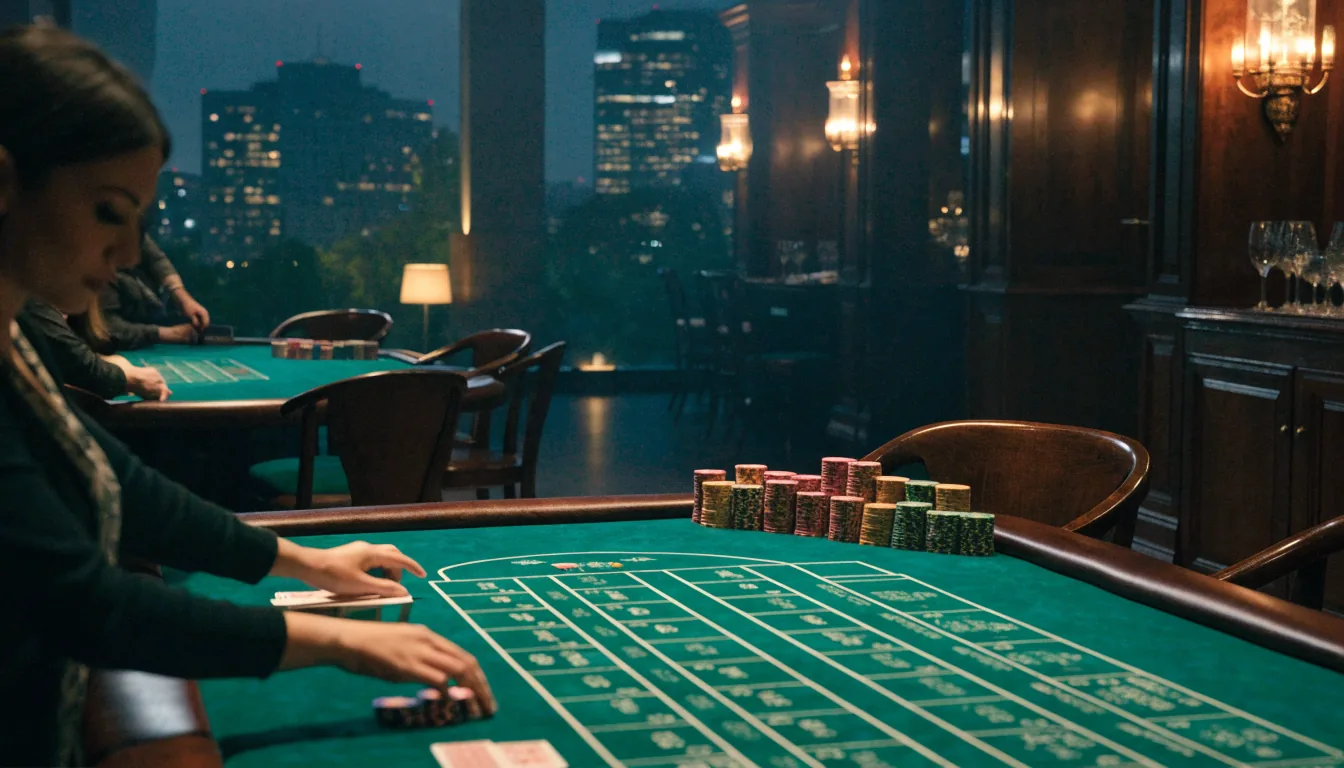

How to Follow a Casino Dice Game
A useful way to follow a dice game is to track what happens in order, rather than trying to learn every possible outcome at once. The precise sequence depends on the game, but most presentations have recognisable stages: the game is prepared, a round begins, an action produces a result, and that result is applied to the game’s stated conditions.
If you are watching a demonstration or reviewing a game’s description, start by identifying what marks the beginning of a round. It might be a host’s announcement, a change on the screen, or an indication that the previous result has been cleared. This matters because choices and outcomes generally belong to a particular round. Mixing a result from one round with the choices made in another makes the rest difficult to follow.
Next, note who or what is due to act. In a table presentation, the game may identify a participant or dealer; in a digital presentation, the interface may prompt for an action or show that the game is ready to proceed. The display can make this seem self-explanatory, but it is worth checking what the prompt actually refers to. A control might confirm a choice, begin an action, or simply move the presentation forward.
Viewing Checklist
- Has the game clearly opened a new round?
- Who or what is acting, and what does the prompt ask for?
- Can you see the dice and identify the outcome?
- Does the game explain what that outcome means?
- Is the round finished, or is another stage still in progress?
Then watch for the event that produces the result. In a dice game, that means paying attention to the dice shown after the roll, not just to an animation or sound effect. Check that the result is clearly visible and that the game identifies which dice count. If the dice are briefly obscured, the result is hard to read, or the display changes before you can register it, pause or replay the explanation rather than guessing.
Once the result appears, look at how the game interprets it. The dice do not explain their own meaning: the game’s conditions determine whether a result settles a choice, changes the next stage, or leaves the round continuing. Follow the sequence of displayed messages and compare them with the description of the game. If the outcome is not explained in a way you can trace, you cannot reliably tell whether the game has applied its conditions as stated.
Keep an eye on the transition after the result. Some games end the round immediately; others show another action before a final outcome. A new prompt or reset can signal that the game has moved on. Do not assume that a visually similar display means the same stage has returned: look for a clear indication that a fresh round has begun.
A simple viewing checklist can help:
- Start: Has the game clearly opened a new round?
- Action: Who or what is acting, and what does the prompt ask for?
- Result: Can you see the dice and identify the outcome?
- Interpretation: Does the game explain what that outcome means?
- Transition: Is the round finished, or is another stage still in progress?
This approach is useful whether you are reading a rules summary, watching a demonstration, or examining a game interface. It is not a recommendation to play casino dice online. Real-money online casino services are prohibited for people in Australia, and describing how a game’s sequence works does not make those services lawful to offer here.
Where a game offers a free demonstration, treat it as a way to understand the presentation, not as evidence that real-money play is available or lawful in Australia. The same sequence can be studied without making a wager: identify the start, follow the action, read the result, and check how the game moves on. If an explanation skips a stage or leaves the result unclear, that is a reason to stop and seek a clearer description, not to fill the gap with an assumption.
Different Casino Games That Use Dice
Dice appear in several kinds of casino game, but sharing the same equipment does not make the games interchangeable. Some centre on a group of players predicting results from a roll; others use dice as part of a private hand or a compact betting round. The number of dice, the way results are compared and the choices available to participants all help define the format.
Shared-roll table games
In a shared-roll game, one or more dice are thrown into a common playing area and the result determines which wagers win. Players may make predictions about a total, a particular face or a combination, depending on the game’s design. Everyone can follow the same roll, even though each person’s selection may differ.
Shared-roll games
In this format, one or more dice are thrown into a common playing area and the result determines which wagers win.
This is the format many people have in mind when they picture a casino table game with dice. The table layout gives wagers specific places, while the roll supplies a result that can be checked against them. A game may use two dice, but that alone does not identify it: what matters is how the rules interpret the combined result and what bets the layout permits.
Craps is a well-known example of this broad format, but it is not the only possible design. Other table games can use a shared throw while organising bets and rounds differently. The distinction is useful because a familiar-looking pair of dice does not tell you which rules apply.
Individual dice hands
Another format treats dice more like cards in a hand. A participant rolls a set and aims for a combination or value recognised by the game. Depending on the structure, the result might be compared with a target, a house result or another player’s hand.
Here, the emphasis is less on several people betting against one communal roll and more on the outcome represented by each hand. The dice may be rolled openly or within a defined playing area, but the important feature is how the resulting combination is evaluated. Games in this category can feel closer to a hand-based table game than to a large shared-roll layout.

Games built around three dice
A game using three dice can offer a different range of totals and combinations from one using two. It may ask players to predict a total, match a particular pattern or assess a result according to a specific chart. Yet the extra die does not automatically make a game more complex or change its basic category. Its format still depends on the choices offered and the way outcomes are settled.
Some dice games use a small, self-contained round rather than a large table with many betting positions. That can make the experience easier to observe, though the wording of the rules still determines what each result means. A three-dice game and a two-dice game might therefore share a broad family resemblance while operating quite differently.
Why the format matters
When comparing casino games played with dice, look first at the structure: Is there one shared roll, or does each participant produce a separate hand? Are bets tied to totals, combinations or comparisons? How many dice are used, and does the game explain how their faces are combined?
These questions separate formats without assuming that all dice tables work alike. The equipment is simple; the game built around it may not be. A name, a table layout and a dice count each offer clues, but none substitutes for understanding the particular game’s structure.
Craps and the Dice on the Table
Craps is the best-known casino game built around a pair of dice. Its table can look complicated at first: the playing surface is broad, marked with betting areas, and often shared by several people. The layout is not decoration. It shows where different wagers are placed and which roll or stage of the game each one concerns.
The Shooter
The person who throws the dice in a game like craps.
At the centre of the action is the shooter, the person who throws the dice. The shooter uses both dice, sending them across the table so they reach the far end. A throw that does not travel properly, or that leaves the table, may be treated as invalid under the table’s procedures. The precise handling rules can differ, so the table’s stated conditions matter.
The dice are ordinary-looking cubes with marked faces, but their movement is central to the game. Both are thrown together, and the marks showing when they settle determine the result. A dealer or other table staff member can check the dice and announce the outcome. That visible process is part of why craps is recognisable in a casino: attention moves from the betting layout to the throw, then back to the marked result.
A craps table is commonly arranged around the shooter’s position, with betting areas on the central layout and along the sides. Some areas are available to everyone at the table; others are positioned for particular players. The felt markings identify the wager, rather than serving as a general place to put chips. Players may make different bets on the same throw, so several parts of the layout can be active at once.
The game’s central sequence gives the table its structure. A new round begins with an opening throw. Depending on the result, the round may end immediately or establish a point that the shooter must reach again before a particular opposing result appears. The dice keep the sequence moving; the table markings indicate which wagers are relevant as it does. This is why a result cannot be understood only as a pair of dice showing a particular face combination: its significance also depends on the stage of the round and the bet being considered.

The table is usually run by staff who handle the dice and chips, keep track of the round, and make sure bets are placed in the correct areas. In a crowded game, that division of tasks helps prevent confusion about which throw has just occurred and which wagers remain in play. It does not make the layout self-explanatory, however. Similar-looking areas can refer to different kinds of bets, and a name printed on the felt is not a substitute for understanding its effect.
Craps is therefore more than a dice throw in isolation. The pair of dice supplies the outcome, while the table gives that outcome a place within the round and connects it to the bets. A clear view of the dice matters, but so does knowing which part of the layout is being discussed. The same visible result can matter differently depending on where the round stands and what a particular wager covers.
Reading Casino Dice Rules Before You Play
Rules are useful only when they tell you what an action means and how its result is settled. Casino dice games can use similar terms while applying them differently, so do not assume that a familiar label guarantees familiar conditions. Read the rules for the specific game and version, rather than relying on a general description.
- Read the specific rules for the game and version.
- Check how the game resolves outcomes.
- Verify that payouts match the written explanation.
- Rely on a general description of dice games.
- Assume a familiar label guarantees familiar conditions.
- Use a promotional summary as a substitute for full rules.
Start with the central sequence: what counts as a valid wager, what event determines the result, and how that result affects each wager. Then check the details that can change the outcome:
- Terms and outcomes: Are the possible results defined plainly? If the rules use terms such as “come-out” or “point”, do they explain them?
- Wager conditions: Does each wager have its own conditions, or do several wagers depend on the same event? Check when a wager is active and when it is settled.
- Payments: Is the amount returned on a win stated clearly, and does it include the original stake? Look for a payout table that matches the written explanation.
- Ties and unusual results: The rules should say what happens when a result does not fit a simple win-or-loss description, or when a round is interrupted.
- Limits and changes: Check any stated minimums, maximums, or conditions that could affect a wager. Find out whether rules can change between game versions.
A clear set of casino dice game rules should explain how the game resolves outcomes without requiring you to infer missing steps. If two parts appear to conflict, or a key term is undefined, treat that as a reason to pause rather than guess. A promotional summary is not a substitute for the full rules, and a payout graphic may not cover every condition.
It can help to read the rules twice: first for the overall structure, then again while checking the wording of each wager. You do not need to memorise every clause, but you should be able to explain what must happen for a wager to win, lose or be returned. If you cannot, the rules are not clear enough for an informed decision.
There is no universally “best” dice game on the basis of its name or presentation. For comparing games, clarity matters: the conditions should be visible before a decision, and the stated outcomes should match the payment information. Rules can explain how a game works; they cannot promise a particular result.

Gambling is for adults aged eighteen or older, and it can cause serious harm to vulnerable people. Understanding a rule set does not remove that risk.
What Makes a Game a Casino Dice Game?
A casino dice game is a game in which dice are central to deciding what happens next. The outcome may depend on the number shown, the combination of faces, or whether a result meets a stated condition. Dice may be physical objects or digital representations; what matters is that their results form part of the game’s rules, rather than serving as decoration.
The label covers more than one format. Craps is the clearest example: players make wagers connected to rolls and their possible outcomes. Other casino-style games may use dice to determine a result within a simpler layout or as one element in a wider game. A game does not become a dice game merely because dice appear on its screen or table. They need to affect the outcome in a meaningful way.
Defining Dice Games
A casino dice game is defined by its mechanics and how dice results affect the rules, not just by the presence of dice imagery.
A useful distinction is between games built around dice and games that only borrow their imagery. In a dice-led game, the rules explain how a roll, or a sequence of rolls, changes the state of play. In a themed game, dice might appear in the graphics while another mechanism determines the result. Checking the rules is a more reliable test than judging by the title or design.
The term also says nothing by itself about how a game is presented. A dice game can be played with physical equipment, simulated digitally, or shown through a live presentation. Those are different ways of delivering the game, not separate definitions of what makes it a dice game.
So, when asking what casino game uses dice, look for the role they have in determining outcomes. Craps is a familiar example, but the broader category includes any casino-style game whose rules make dice results consequential. The category is defined by the game’s mechanics, not by whether you can see someone handling dice.
Dice-Game Strategy and the Limits of Patterns
People looking for casino dice strategy often want a method that turns observation into an advantage. The useful starting point is more modest: strategy can help you understand decisions and manage uncertainty, but it cannot make a random result predictable.

A run of similar outcomes can feel meaningful. In a game based on independent, fair rolls, however, earlier results do not make a particular result more likely on the next roll. A sequence that appears “due” to change is no more reliable as a guide than one that appears likely to continue. Patterns describe what has already happened; by themselves, they do not establish what will happen next.
That distinction matters across casino games that use dice. Some formats give you choices about which outcomes to back or how to arrange a wager; others offer little meaningful decision-making once play begins. A choice may alter the range of outcomes available or the amount at risk, but it does not control the dice. A strategy that sounds persuasive should therefore be judged by what it actually changes, not by a streak that happened to follow it.
It can help to separate three questions: what decision is yours to make, what outcomes are possible, and what remains outside your control. Looking at those separately discourages common errors, such as treating a recent result as evidence of a hidden cycle or assuming that a complicated betting sequence can overcome chance. Complexity is not proof of an edge.
If you are assessing a dice game at a casino, consider whether the decision is understandable and whether you can accept the uncertainty attached to it. Do not treat a strategy as a way to recover losses or as a source of income. Gambling can cause serious harm, particularly for people vulnerable to it; stepping away is a sound response if play is becoming difficult to control.
Strategy Limits
Attention No system or strategy can make a random result predictable or guarantee a winning outcome.
The practical value of strategy is clearer thinking, not certainty. It can help you recognise the limits of a decision and avoid mistaking coincidence for a signal. No system can promise a winning result, and a memorable streak does not change that.
What to Expect from Live Casino Dice
“Live” describes how a game is presented, not a different kind of dice. In a live format, a camera shows a real table and a human dealer handling the dice. The game’s action is transmitted as a video feed, while the interface displays the available choices and records selections. You are watching a physical event rather than an animation generated entirely by software.
A non-live game generally uses a digital system to produce and display its result. It may resemble a table game on screen, but there is no dealer physically rolling dice in front of a camera. The distinction is about presentation and how the result is produced; it does not, by itself, tell you whether a game is fair, easy to follow or suitable for you.
A live broadcast can make the sequence easier to see: the table, dice and dealer are visible, and the result is announced as it happens. But a camera view is not the same as independent proof of every detail. The feed may have a delay, and the interface still matters: it determines what options are shown and how a selection is registered. If you are assessing a demonstration or recorded material, check whether it is genuinely live rather than a replay or an edited presentation.
The phrase “live casino dice” can therefore refer to a streamed dice table, while “online” describes how viewers receive that stream. The terms do not establish that a real-money service may lawfully be offered in Australia. Here, real-money online casino services are prohibited for operators to provide to people in the country. A description of the format is not an invitation to access one.

Games Where You Roll the Dice
When someone describes a casino game as one where you roll or throw the dice, the key point is physical control: a person handles the dice and sends them across a surface. That differs from watching a dealer or another participant roll, and from tapping a control that makes a digital game generate a result. The action may look similar on screen, but the player is not physically throwing anything.
The distinction matters when you are trying to understand what a game involves. In a hands-on setting, the dice are tangible objects and the throw is visible. In a filmed presentation, you may see real dice being handled, but the camera’s view does not make the action yours. In a software-based version, a roll may be represented by an animation; that is a visual display of a game result, not a physical throw by the viewer.

The phrase can also refer to different settings, from a non-wagering demonstration to a casino game involving money. Those are not interchangeable. A description of how dice are rolled does not itself make a game a lawful or appropriate way to gamble online in Australia. The distinction between physical action and an on-screen result says nothing about whether a service may lawfully offer real-money play.
If you are considering gambling in any setting, it is for adults aged 18 or over. Gambling can cause serious harm, particularly for vulnerable people, and a physical roll does not make its financial consequences less real. For a reader who simply wants to understand the phrase, the practical test is straightforward: are you handling the dice, watching someone else handle them, or seeing a device produce a result? Those describe different experiences, even when all are called a roll.
Published by the WishWin Casino team.