
Casinos That Accept MiFinity in Australia: What’s Known
 Available in AU
The article distinguishes everyday payment habits from operator-specific evidence and explains why online cashier listings matter.

- How Australian Payment Habits Shape the MiFinity Question
- What the Available Evidence Says About Casino Deposits
- Why Acceptance Claims Need Method-Specific Evidence
- Withdrawal Timing and Fees: What Is Actually Documented
- The 2026 MiFinity Search: What Can—and Cannot—Be Confirmed
- Payment Methods Are Separate From the Games on Offer
- Australian Rules and the Limits of Consumer Protection
- What the Amex Withdrawal Rules Do—and Don’t—Tell You
- Comparing a Payment Route With Cards and Bank Transfers
- MiFinity and Casino Bonuses: No Verified Terms to Report
How Australian Payment Habits Shape the MiFinity Question
In Australia, paying by card or phone is part of ordinary everyday life. Contactless credit and debit cards are accepted almost everywhere, and mobile wallets such as Google Pay and Apple Pay are similarly widespread. Consumers are also comfortable moving between cards, mobile wallets and services linked to bank accounts, including PayPal. That familiarity helps explain why people may want to know whether a particular payment option is available for an online service.
But familiarity with a payment method in daily life does not answer whether a specific online operator accepts it. A card that works at a local shop, or a mobile wallet used for routine purchases, cannot by itself establish what appears in an online cashier. The same distinction applies to MiFinity: Australians may be accustomed to choosing between several ways to pay, but that general habit is not evidence that any particular casino supports MiFinity.
This is a useful distinction because payment choices can look interchangeable from the customer’s point of view. You may be used to tapping a card, opening a wallet on your phone or using a bank-linked service, then selecting whichever option suits the purchase. Online payment menus, however, are specific to the service and the transaction. Familiarity with one route says nothing definite about another route’s availability.
If you’re looking for a casino that accepts MiFinity in Australia, check the payment options available to your account before depositing. These brief verdicts highlight the details provided for each operator, but do not confirm MiFinity acceptance.
License: Curacao eGaming OGL/2024/923/0383 (Antillephone N.V.) · Min. deposit: A$30 WinSpirit Casino is listed with a Curacao eGaming licence, OGL/2024/923/0383, issued through Antillephone N.V. Its stated minimum deposit is A$30.
License: Curacao Gaming Control Board OGL/2023/174/0082 (Dama N.V.) SpinsUp is listed with a Curacao Gaming Control Board licence, OGL/2023/174/0082, held by Dama N.V. The available details do not specify its MiFinity options.
License: Curacao eGaming (Hollycorn N.V., since 2017) · Min. deposit: A$20-30 (depends on the offer) Playfina Casino is listed as licensed by Curacao eGaming through Hollycorn N.V., which has operated since 2017. Its minimum deposit is A$20–30, depending on the offer.
License: Curacao, operated by Dama N.V. 7Bit Casino is operated by Dama N.V. under a Curacao licence; no further operator details are provided here.
License: Curacao (operating since 2017) · Min. deposit: A$20 Uptown Pokies is listed as operating under a Curacao licence since 2017. Its stated minimum deposit is A$20.
License: Curacao Gaming Authority (Jumpman Gaming Ltd) DragonSlots Casino is listed with a Curacao Gaming Authority licence, held by Jumpman Gaming Ltd. The supplied details do not specify its payment methods.
License: Curacao Gaming Control Board JustCasino is listed with a Curacao Gaming Control Board licence. No further details are provided here.
Payout speed: crypto under 1 hour, PayID 1-3 business days · Min. deposit: A$20 (A$30 to qualify for the bonus) Ricky Casino lists crypto payouts in under an hour and PayID payouts in 1–3 business days. The minimum deposit is A$20, or A$30 to qualify for the bonus.
Payout speed: crypto ~90 minutes, fiat 1-5 days · Min. deposit: A$30 Kingmaker lists crypto payouts at around 90 minutes and fiat payouts in 1–5 days. Its stated minimum deposit is A$30.
License: Curacao · Min. deposit: A$20 (POLi) Lucky Dreams is listed with a Curacao licence and an A$20 minimum deposit for POLi. The supplied details do not confirm MiFinity availability.
The local context therefore shapes the question, rather than settling it. Australians’ routine use of cards and mobile wallets makes it natural to expect a range of payment choices online. Their comfort with bank-linked services adds to that expectation. Yet a broad payment culture cannot verify a particular method at a particular operator. Whether MiFinity is listed, and what role it may have there, has to be considered separately from the fact that Australians commonly use other digital payment options.
It is also worth keeping the names of payment methods distinct. A mobile wallet, a card and a bank-linked service are not simply different labels for the same thing. They describe different ways of making a payment, and one being familiar or widely used does not establish that another is available. So an Australian reader looking for an online casino that accepts MiFinity should treat general statements about digital payments as background, not confirmation.

That matters especially when a phrase such as “online casino payment options” is used loosely. It can refer to the general range of ways people pay online, or to the exact methods offered by one service. Those are different claims. The first can describe Australian habits; the second requires information about the individual cashier. Without that distinction, broad statements about cards, phone wallets or bank-connected services can create an impression of coverage they do not support.
The everyday experience can make the gap easy to miss. A person who regularly pays contactlessly may reasonably expect cards to be a familiar option, while someone who uses a phone wallet may expect to see that kind of service online too. But neither expectation establishes the availability of MiFinity. Nor does the popularity of other payment routes tell you whether MiFinity can be used for a particular transaction. Convenience in one setting does not carry over automatically to another.

For readers comparing payment methods, the practical starting point is therefore to separate what is common in Australian daily life from what is confirmed for an individual service. The first is clear: contactless cards, mobile wallets and bank-linked services are familiar parts of the local payment landscape. The second cannot be inferred from that background. A cashier’s available options are a separate, operator-specific matter.
This distinction keeps the MiFinity question in proportion. It is understandable that Australians accustomed to switching among payment types would look for the same flexibility online. But that habit describes consumers, not the terms or capabilities of any particular operator. General familiarity can explain why the question arises; it cannot answer whether an Australian online casino accepts MiFinity.
What the Available Evidence Says About Casino Deposits
A card-payment procedure cannot be used as evidence for a different payment service, even when both appear in discussions of online deposits. If you are checking whether MiFinity can be used, the Amex steps below do not answer that question.
Amex deposit steps
Select Amex in the cashier.
Provide your card information.
Provide an AUD amount and submit.
The cashier is the part of the account where payment options are displayed and transactions are initiated. Seeing Amex there would be relevant to an Amex deposit; it would say nothing by itself about whether MiFinity is also offered.
The order matters because payment methods are not interchangeable labels for the same route. A deposit made with a card relies on the card details and the card payment process. A deposit through MiFinity would require MiFinity to be presented as an available option and the transaction to follow its own process.
A specialist review reports that deposits using Amex are available at some Australian online casinos. That is a limited statement, not a guarantee that the option appears at every site or remains available in every cashier. Payment menus can be specific to the operator and may change. The report also does not establish MiFinity availability: its subject is Amex.
The Amex deposit is described as being processed instantly. That refers to the payment processing, not necessarily to every surrounding step, such as setting up an account or completing any checks the operator requires. If the method you intend to use is not explicitly named in a cashier, another method’s processing speed is no guide to it.
When reviewing a cashier, keep the method and the transaction distinct. First identify the exact payment option displayed. A generic reference to “card” or “e-wallet” is not enough to establish that a specific service is supported. The name of the payment method is the useful detail.


This distinction is particularly important when a page or account screen mentions several ways to pay. A site may describe deposits generally, while a particular method is available only under particular circumstances—or not shown at all. An Amex deposit instruction can confirm how an Amex transaction is initiated when that option is offered.
The same caution applies to wording that groups payment methods together. A mention of cards, digital wallets or payment services does not identify each supported option.
For the Amex route, the essential details are therefore narrow: select Amex in the cashier, provide card information and an AUD amount, and submit; a specialist review says this deposit option is available at some Australian online casinos, and Amex deposits are described as processing instantly. Those details can help you understand an Amex transaction. They should not be read as instructions for MiFinity or as evidence that any particular cashier offers it.
Why Acceptance Claims Need Method-Specific Evidence
A payment option is not a proxy for another one. If a casino’s cashier lists a card, that tells you about that card; it does not establish that the same cashier supports MiFinity. The methods have separate arrangements, and a claim about one should not be stretched to cover another.
That distinction matters when you are assessing claims about casinos that accept MiFinity in Australia. A statement that an operator takes Visa or Amex is not evidence that it takes MiFinity, whether for a deposit or a withdrawal. Nor does the fact that a cashier offers several payment choices establish that every method is available to every customer. The relevant evidence is an operator’s current, method-specific information for the transaction you intend to make.
Some Australian online casinos allow Amex deposits, which are described as processing instantly.
Visa may be accepted more broadly at Australian online casinos than Amex.
A specialist review reports that some online casinos do not accept Amex.
A specialist review has reported that some online casinos do not accept Amex. That is a limited report, not a fixed description of the whole market: payment arrangements can change, and the report cannot establish what any particular operator accepts now. The same care applies to statements about Visa. A specialist review has said Visa may be accepted more broadly at Australian online casinos than Amex. “May” matters here: it is a comparative claim, not a guarantee that Visa will work at a particular cashier or that another method will be supported there.
These card comparisons are useful mainly as a warning against over-reading acceptance claims. If one card has a wider reported reach than another, that tells you nothing definite about a digital wallet or payment service. MiFinity cannot be inferred from Visa’s relative reach, and Amex’s limits do not establish MiFinity’s availability either. Each method needs its own confirmation.
When you encounter an acceptance claim, check what it actually names. Does it refer to MiFinity itself, or merely to cards, a general collection of payment methods, or a casino’s payment facilities in broad terms? Does it concern deposits, withdrawals, or both? Those are distinct questions. A payment method appearing as a deposit option would not, by itself, demonstrate that winnings can be returned through it. Equally, a broad statement that a casino accepts “online payments” is too vague to settle a method-specific question.
Be careful, too, about treating an old reference as current. Payment availability is subject to change, and a review that described a cashier at one point may not reflect its present options. A method may also be available only under particular account or transaction conditions. If the wording does not identify the method and the direction of payment, it leaves room for assumptions that the reader should not have to make.

A sound acceptance claim therefore needs a narrow scope: it should identify the payment method, say whether the claim is about paying in or cashing out, and be tied to the operator’s current terms or cashier information. Without those details, a comparison between card brands cannot do the work. Visa being described as more widely accepted than Amex does not amount to a finding about MiFinity, and neither card’s reported availability can stand in for direct evidence about a separate payment service.
This is not a ranking of payment routes. It is a way to separate one claim from another. Treat each method independently, and do not let an operator’s support for one card create an assumption about MiFinity.
Withdrawal Timing and Fees: What Is Actually Documented
For Amex withdrawals, a specialist review gives a clearing time of up to five days. That is a reported timeframe, not a universal service standard or a promise that every casino will complete a payment within it. The review does not establish how long an individual operator may take to approve a withdrawal before processing begins, so the clearing estimate should not be read as covering every stage.
The distinction matters when you are assessing how quickly money might reach you. A stated clearing period describes the reported payment timing, but it does not tell you whether a casino has additional review steps or how those might affect a particular withdrawal. Nor does the estimate confirm that every operator accepts Amex for cash-outs. Withdrawal availability and timing are separate questions.
Amex withdrawal details
For Amex withdrawals, a specialist review gives a clearing time of up to five days. Note that a casino may require you to have deposited via Amex first to use it for withdrawals.
Fees need similar care. A specialist review says that withdrawal fees may apply, with the charge depending on the casino. That does not mean every Amex cash-out carries a fee, or that a fee-free deposit tells you anything about the cost of withdrawing. A deposit and a withdrawal are separate transactions, and the terms for one should not be assumed to govern the other.
A separate specialist review describes gambling transactions on Amex as free while also noting that withdrawal charges may depend on the bookmaker. Those statements concern different parts of the payment journey: a transaction fee on a deposit is not the same as a fee imposed when funds are paid out. For a casino withdrawal, the operator’s own terms are the relevant place to establish whether a charge applies. The available reporting does not support treating one fee arrangement as common to every casino.
Withdrawal limits can vary as well. A specialist review says individual online casinos set their own Amex deposit and withdrawal limits. That means there is no single amount that can be presented as the standard cash-out limit across operators. A limit may affect whether a requested withdrawal can be made in one transaction, but the review does not provide a universal threshold. Check the terms for the specific cashier and account rather than relying on a figure reported for another operator.
These Amex details do not establish MiFinity withdrawal speed, charges or limits. Payment methods have separate processing arrangements, and an Amex estimate cannot be transferred to a MiFinity cash-out just because both methods may appear in a casino payment discussion. In particular, the reported five-day clearing period is tied to Amex, not a general measure of how quickly casino withdrawals are paid.

If you are comparing payment options, keep the questions distinct: whether a method is accepted for withdrawals, how long a withdrawal takes to clear, whether a fee applies, and what limits the operator sets. The available Amex reporting provides a qualified timing estimate and warns that fees and limits can depend on the casino. It does not provide a reliable basis for predicting MiFinity terms or the timing of a particular operator’s payment.
The 2026 MiFinity Search: What Can—and Cannot—Be Confirmed
Looking for a casino that takes MiFinity in Australia involves two separate questions: whether an operator offers that payment method, and whether it may lawfully offer online casino games to people in Australia. A payment option shown on a website would address only the first question. It would not, by itself, make the service lawful for Australian customers.
The Interactive Gambling Act 2001 prohibits operators from providing online casino games to Australian residents. The law does not explicitly make players’ use of offshore sites a criminal offence, but that distinction should not be mistaken for approval or consumer protection. The Australian Communications and Media Authority (ACMA) oversees enforcement of the Act.
For that reason, a general claim that a site accepts MiFinity is not enough to establish that the service is available to Australian residents, or that it is appropriate for them to use. Payment availability can be presented in broad terms, while access and legal status depend on the service being offered to people in Australia. The wording on a payment page does not settle that wider issue.
Legal Status
The Interactive Gambling Act 2001 prohibits operators from providing online casino games to Australian residents. A payment method being available does not guarantee the service is lawful for you.
The phrase “MiFinity casino” can also blur the difference between a payment brand and an operator. MiFinity is a payment method; it is not a casino or a guarantee that a particular cashier will offer it. Nor does finding a reference to MiFinity establish that a debit product linked to it will be treated the same way. Those are operator-specific details, not consequences of the payment method’s name.
If you are checking a claim about MiFinity, read it narrowly: does it identify the operator, the relevant customer location and the payment action being described? “Accepted” might refer to deposits, while a separate rule may govern withdrawals. Even a clear statement about payment acceptance does not answer whether the operator can lawfully provide online casino games to someone in Australia.
The central distinction is therefore between a payment feature and a lawful service. A casino may advertise a route for moving money, but that does not remove the restrictions imposed on operators under Australian law. ACMA’s enforcement role is part of that context; a payment logo or cashier listing does not displace it.
A careful decision starts with the legal position, not with a promise that a payment method is available. For Australians, the Act’s restriction concerns operators offering online casino games to people in the country. The fact that the law does not explicitly criminalise players using offshore sites does not turn those services into locally authorised casinos. Nor does it establish that a MiFinity option shown online is intended or available for Australian use.

Payment Methods Are Separate From the Games on Offer
A payment option and a game catalogue answer different questions. A reference to MiFinity as a casino payment method, for instance, would concern how a transaction might be handled; it would not show whether a particular game is available. Nor does a mention of casino games alongside MiFinity establish that the games can be accessed through that payment route.
The distinction matters because payment descriptions can be read too broadly. “MiFinity casino payments” describes a connection between a payment service and a gambling account, if an operator offers that route. It says nothing by itself about the operator’s catalogue, the games’ rules or whether any particular title can be played. The reverse is also true: a description of a game does not establish which payment options, if any, are available.
This applies to searches for games associated with MiFinity, including pokies. A payment reference is not a catalogue, and it is not evidence that specific games accept MiFinity directly. In a typical account arrangement, the payment service and the game provider serve separate roles: one concerns the movement of funds, while the other concerns the content. A page that places both names together does not necessarily explain how those roles relate. Read the wording carefully rather than treating proximity as proof.
There is also an identity check to consider. Before allowing financial transactions, online casinos typically ask customers to complete a Know Your Customer assessment, often shortened to KYC. This is a process for verifying a customer’s identity. It is distinct from choosing a payment option or selecting a game; a payment reference does not show whether the check has been completed or what documents an operator may request.
KYC
This is a process for verifying a customer’s identity, often required by online casinos before allowing financial transactions.
So, when you encounter a claim about MiFinity and casino games, separate the questions: does the statement concern a payment route, a game catalogue, or both? Look for explicit wording for each, rather than assuming one establishes the other. This distinction helps prevent a payment label from being mistaken for proof about games, and keeps identity checks in their proper place: they are part of account verification before financial activity, not a feature of the games themselves.
Australian Rules and the Limits of Consumer Protection
A payment option does not change the legal status of the service receiving it. Whether a site mentions MiFinity or another method, the relevant question is whether it is offering online casino games to people in Australia.
The Interactive Gambling Act 2001 prohibits operators from providing online casino games to Australian residents. The restriction applies to operators; the Act does not explicitly make it a criminal offence for a player to use an offshore casino. That distinction should not be mistaken for an endorsement or a guarantee that using such a service is safe.
The Australian Communications and Media Authority (ACMA) oversees enforcement of the Act. Its role is to enforce the rules governing online gambling services, rather than to resolve a player’s payment dispute or ensure that an offshore casino returns money. A site’s availability or its acceptance of a payment method does not show that it is lawful for the operator to offer casino games to Australians.

There is also a practical consumer-protection limit. Australian consumer law does not protect players who use offshore casinos. If an overseas operator fails to process a payment, restricts access to an account or refuses to pay winnings, you cannot assume that Australian consumer protections will provide a remedy. The fact that a cashier lists MiFinity—or that a deposit appears to go through—does not establish that the operator is subject to Australian consumer law.
These points matter when assessing claims about an Australian casino using MiFinity. Payment acceptance is a technical detail, not evidence of legality, oversight or recourse. Nor does the absence of explicit criminal liability for players mean that offshore gambling is locally regulated. The law addresses the operator’s provision of the service, while the protection available to a customer of an offshore casino remains limited.
For you, the distinction is straightforward: a payment route may answer how a transaction is attempted, but it cannot answer whether the casino may legally offer its games in Australia or what protection you would have if something went wrong.
What the Amex Withdrawal Rules Do—and Don’t—Tell You
An Amex deposit does not guarantee that a casino will send winnings back to the same card. A specialist gambling review reports that some casinos may refuse Amex withdrawals or apply an extra fee. A separate specialist review notes that not all Australian online casinos permit withdrawals to Amex. These are operator-specific conditions, not a universal rule, and they can change.
There is also a prior-deposit condition: to withdraw through Amex, you must have deposited using Amex first. That requirement concerns the card route. It does not mean every casino that accepts an Amex deposit will also offer Amex as a withdrawal option. Nor does it establish that a withdrawal will be approved simply because the earlier deposit was made with the card.
- Check the operator’s current cashier information.
- Read the specific withdrawal terms and charges.
- Confirm if the method is explicitly named.
- Assume Amex withdrawal rules apply to MiFinity.
- Infer MiFinity availability from card payment options.
- Treat one method’s processing speed as a guide for another.
For you, the practical distinction is between depositing and cashing out. A payment method shown in a cashier for deposits is not, by itself, confirmation that the same method can receive withdrawals. Before making a financial decision, read the operator’s current cashier information and withdrawal terms, including any restrictions or charges stated there. The relevant conditions may differ between casinos.
These Amex details do not answer whether a casino supports MiFinity withdrawals. A requirement to have deposited with Amex first applies to Amex, not to a digital wallet. Likewise, reports of Amex withdrawals being unavailable or carrying a fee cannot be transferred to MiFinity. Each method needs its own current, operator-specific confirmation.
So if you are assessing a casino with MiFinity in mind, look for explicit information about withdrawing through MiFinity, rather than inferring it from an Amex policy or from the presence of MiFinity as a deposit option. If that information is not clear, the Amex conditions provide no reliable substitute. Payment names can sit side by side in a cashier; their withdrawal rules do not thereby become interchangeable.
Comparing a Payment Route With Cards and Bank Transfers
Payment methods can differ in processing time and charges, so comparing routes is useful when assessing how to fund an account. A payment method’s name alone tells you little about the cost or timing at a particular operator.
Bitcoin and Ethereum are reported to allow deposits and withdrawals to be processed instantly, with limited or no fees. That can make them appear attractive beside routes where processing takes longer or charges are higher. But “limited or no fees” does not mean every transaction is free, and the stated speed does not settle what an individual service will provide. Check the payment terms shown before proceeding rather than assuming the same treatment applies everywhere.
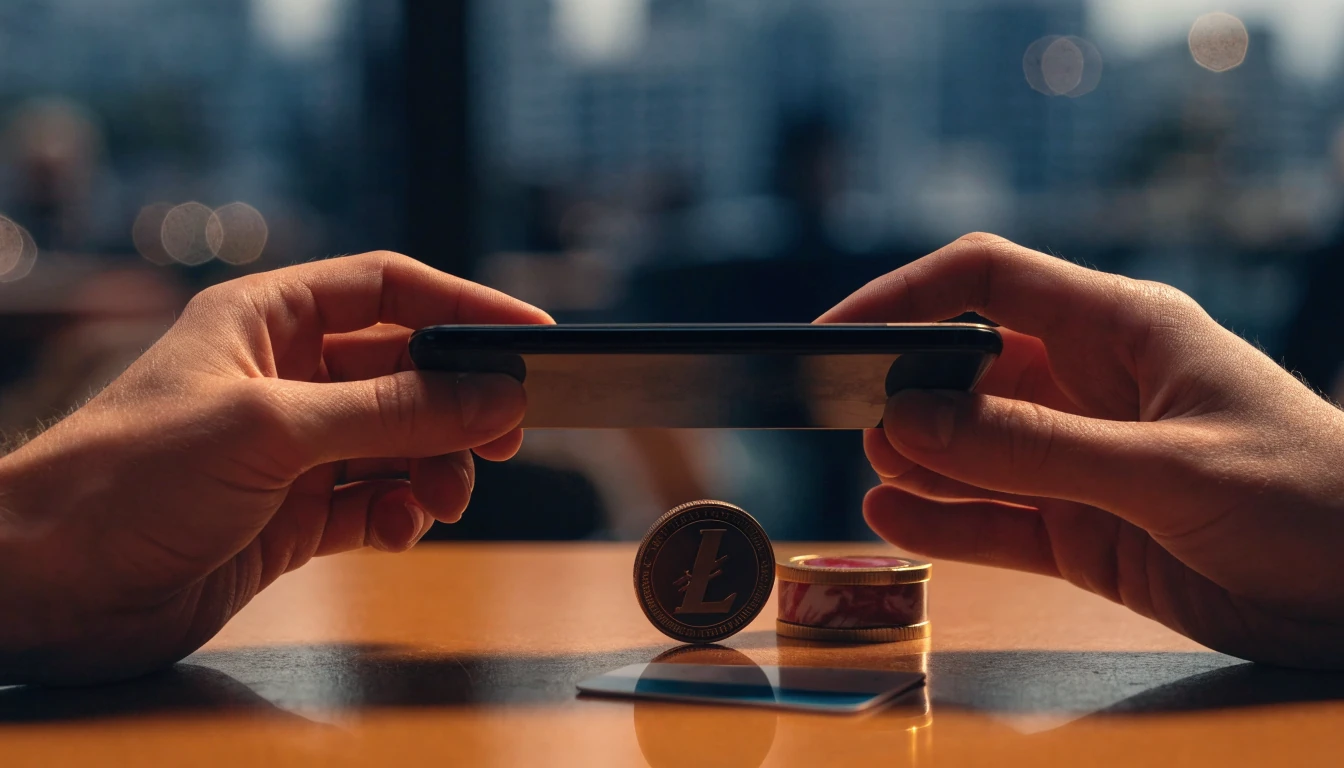
A specialist review describes bank transfers as potentially involving longer waits and higher fees. These are possibilities, not fixed terms: the timing and cost can depend on the service handling the transaction. A transfer may therefore be less immediate than the cryptocurrency route described above, but the comparison does not establish a precise wait or charge.
Cards and bank-linked services are familiar alternatives for many Australians, but familiarity is not a guarantee that a particular gambling operator will accept a given route or process it on the same terms. Nor can cryptocurrency or bank-transfer details be used to infer how MiFinity works. If you are considering MiFinity as a casino payment method, treat its deposit and withdrawal arrangements as separate questions and look for terms that name MiFinity specifically.
In practical terms, compare the stated processing time, fees and whether the route covers deposits, withdrawals or both. Cryptocurrency information here concerns both directions; the bank-transfer note describes possible waits and costs without specifying a particular transaction. For MiFinity, rely only on operator terms that explicitly apply to that wallet, rather than borrowing expectations from cards, crypto or bank transfers.

MiFinity and Casino Bonuses: No Verified Terms to Report
A payment method and a bonus are separate things. Seeing MiFinity listed as a way to pay would not, on its own, establish that a casino offers a bonus for using it. Nor would a general promotion prove that MiFinity users qualify.
Those details should not be inferred from the presence of a payment option or from bonus wording that does not expressly cover MiFinity.
This distinction matters because promotional terms can determine whether an offer applies to a particular payment route. If a promotion’s wording does not clearly identify MiFinity, you cannot safely assume that paying with it qualifies. Equally, the absence of a stated MiFinity condition should not be treated as confirmation that a promotion is compatible with the method.
For the same reason, broad phrases such as “new-player offer” or “deposit bonus” do not establish a MiFinity-specific benefit. A claim about a MiFinity bonus needs clear terms identifying the offer and its payment-method rules. Without that, no particular bonus, qualification rule or promotional entitlement should be attributed to MiFinity.
What are the deposit and withdrawal limits at the best Amex casinos?
Limits are set by each casino and can vary. Check the casino’s cashier or payment terms for its Amex deposit and withdrawal limits.
How do you check if casino sites accept Amex deposits?
Check the casino’s cashier for American Express as a deposit option. If it is listed, select it, enter your card details and deposit amount in AUD, and submit the payment.
What are the fees involved with American Express payments?
Amex deposits typically have no fee, but a casino may add a 1.5% surcharge. Currency conversion can incur a 3% fee, and withdrawal fees may apply.
How can I know if an online casino will accept American Express?
Look for American Express in the casino’s cashier. Some Australian online casinos accept Amex, but others do not.
Are there any fees associated with using American Express at online casinos?
Deposits are typically free, though a casino may apply a 1.5% surcharge. A 3% currency conversion fee or withdrawal fee may also apply.
Written by the editors at WishWin Casino.