
Casinos That Accept Litecoin in Australia
 Available in AU
The available information distinguishes general crypto-payment references from confirmed Litecoin support, Australian access and transaction details.
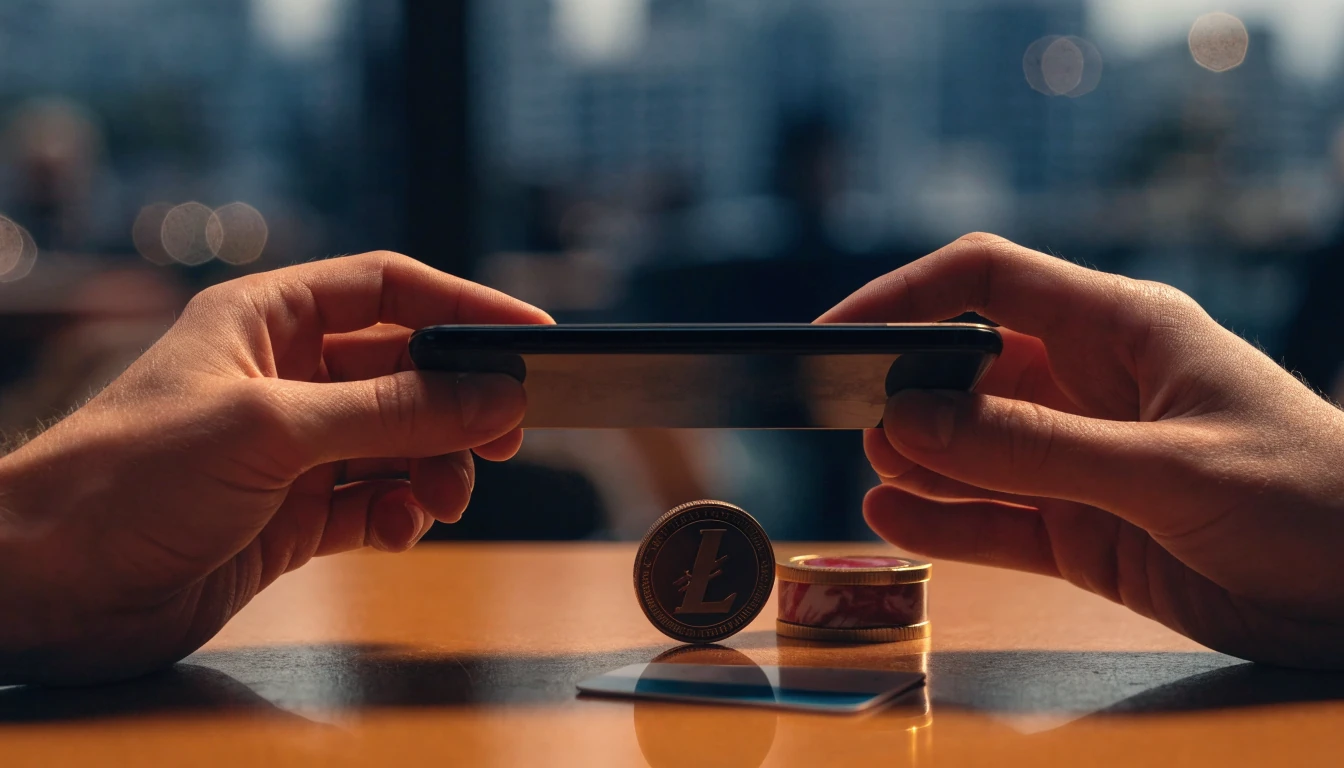
- What the Available Information Says About Litecoin Casinos
- How to Assess Claims About Litecoin Casino Sites
- Bonus and Slot Claims You Cannot Verify Here
- What Is Known About Crypto Casino Payments
- Playing With Litecoin: What Remains Unverified
- Australia’s Rules on Offshore Online Casinos
- Deposits, Withdrawals and the Limits of Crypto Payment Claims
- Live Dealer Searches and Litecoin: No Verified Platform Details
What the Available Information Says About Litecoin Casinos
A request for casinos that accept Litecoin in Australia is specific: it asks whether a person in the country can use that cryptocurrency at an online casino. The phrase can also cover several different interests, from playing casino-style games on a phone to using Litecoin at a live-dealer table. Those interests are related, but a mention of one does not establish the others.
A name appearing alongside Litecoin is not, by itself, confirmation that the casino accepts it, that the payment option is available to Australians, or that a transaction can be completed.
Payment information about other methods does not fill that gap. A casino’s support for cards, mobile wallets or bank-linked services says nothing conclusive about whether it supports Litecoin. Nor can general statements about cryptocurrency payments be transferred automatically from Bitcoin or Ethereum to Litecoin. Each asset and each operator may have different arrangements; a shared label such as “crypto” is not proof of shared terms.
The same distinction matters when the word “online” is added. It describes where a service is accessed, not which payment methods it accepts. A casino may be described as online without any confirmed Litecoin option. Likewise, the presence of a cryptocurrency logo or a broad claim that a site supports digital assets does not establish that Litecoin is among the supported currencies or that it can be used for a particular account.
Use this list as a starting point when checking casinos for a Litecoin-related option in Australia. The available details do not confirm Litecoin support, so verify the payment methods directly before depositing.
License: Curacao eGaming OGL/2024/923/0383 (Antillephone N.V.) · Min. deposit: A$30 WinSpirit lists a Curacao eGaming licence, issued through Antillephone N.V., and a minimum deposit of A$30. The available details do not specify whether you can deposit with Litecoin.
License: Curacao Gaming Control Board OGL/2023/174/0082 (Dama N.V.) SpinsUp lists a Curacao Gaming Control Board licence held by Dama N.V. No Litecoin payment details are provided, so check directly whether it suits your needs.
License: Curacao eGaming (Hollycorn N.V., since 2017) · Min. deposit: A$20-30 (depends on the offer) Playfina lists a Curacao eGaming licence held by Hollycorn N.V. since 2017, with a minimum deposit of A$20–30 depending on the offer; Litecoin availability is not specified.
License: Curacao, operated by Dama N.V. 7Bit is listed as operating under a Curacao licence through Dama N.V. The supplied information does not confirm Litecoin deposits.
License: Curacao (operating since 2017) · Min. deposit: A$20 Uptown Pokies is listed as operating since 2017 under a Curacao licence, with a minimum deposit of A$20. The available details do not say whether Litecoin is accepted.
License: Curacao Gaming Authority (Jumpman Gaming Ltd) DragonSlots is listed under a Curacao Gaming Authority licence held by Jumpman Gaming Ltd. No Litecoin payment information is provided.
License: Curacao Gaming Control Board JustCasino lists a Curacao Gaming Control Board licence. The supplied details do not establish whether you can use Litecoin there.
Payout speed: crypto under 1 hour, PayID 1-3 business days · Min. deposit: A$20 (A$30 to qualify for the bonus) Ricky Casino lists crypto payouts in under an hour and PayID payouts in 1–3 business days. Its minimum deposit is A$20, or A$30 to qualify for the bonus; the details do not specify whether Litecoin is supported.
Payout speed: crypto ~90 minutes, fiat 1-5 days · Min. deposit: A$30 Kingmaker lists crypto payouts at about 90 minutes and fiat payouts at 1–5 days, with a minimum deposit of A$30. The available details do not identify Litecoin as a supported currency.
License: Curacao · Min. deposit: A$20 (POLi) Lucky Dreams lists a Curacao licence and a minimum deposit of A$20 via POLi. Litecoin availability is not specified in the supplied details.
References to Australian availability also need to be read narrowly. A service being visible on the internet, or described as serving an international audience, does not establish that Australian residents can use it. In this context, an Australian-facing claim would need to establish both the relevant location and the payment method. Without that connection, the claim does not answer whether a Litecoin casino is available to someone in Australia.
Terms such as “pokies” can create another ambiguity. In Australia, the word is commonly used for slot-style casino games, but it does not identify a payment method or confirm that a game or service is accessible. Adding Litecoin to a description of pokies still leaves the essential point unresolved: whether any particular service is confirmed to accept Litecoin from Australian users.
“Mobile” describes a device or format, not a separate kind of payment. A casino page that works on a phone would not, for that reason alone, establish Litecoin support. The same applies to “live”: it may refer to a live-dealer format, but it does not confirm that Litecoin can be used there. Combining those descriptions can make a claim sound detailed while leaving the payment question unanswered.
That is why the narrow conclusion is more useful than a speculative list. A confident recommendation would require evidence connecting a named operator, Australian access and Litecoin acceptance, rather than relying on broad labels or assumptions.
For a reader, the practical distinction is between an assertion and a confirmed fact. A page can use phrases such as “Litecoin casino,” “crypto casino” or “Australian players” without demonstrating that all the parts apply together. The wording may describe a topic, an intended audience or a general feature, rather than a payment facility available to a person in Australia. Treating those as interchangeable would turn a search phrase into a claim of availability.
The phrase “casinos that accept Litecoin in Australia” therefore describes a question, not a verified category of operators. Any more specific conclusion would need reliable, current confirmation tied to the particular service and Australian access.
How to Assess Claims About Litecoin Casino Sites
A claim that an online casino accepts Litecoin is not the same as a substantiated recommendation. The first statement concerns a particular feature; the second asks you to trust the operator more broadly. A ranking goes further still, implying that several sites have been compared using consistent evidence. Those distinctions matter when a page presents a “best” choice without showing how the sites were identified, checked or judged.

A useful assessment starts with the operator’s identity. A site name or polished homepage is not, by itself, enough to establish who runs the service. Look for a clearly identified company and consistent details across the site’s terms, privacy information and other formal pages. If the operator’s name is absent, changes between pages or cannot be matched to the service being described, a confident recommendation is hard to evaluate. A review should not fill that gap with assumptions.
The exact website matters too. Similar names, copied branding and lookalike addresses can make it unclear which service a review means. A claim about one domain does not establish that another site with a similar name has the same owner, terms or features. Any assessment should identify the specific service it concerns and make clear whether the cited evidence relates to that service, rather than to a similarly named business or a general brand.
Separate evidence from recommendation
A site’s own statement can show what the operator says about itself. It does not independently confirm that the statement is accurate, current or applicable to every visitor. A review that repeats promotional language without explaining its basis offers little more than a second version of the claim.
Stronger assessments distinguish between first-party statements and independent checks. They tell you what was inspected, when it was inspected and how the conclusion follows from that inspection. They also acknowledge when a finding applies only to a particular page, account status or jurisdiction. Without those details, words such as “verified” or “trusted” may sound conclusive while leaving the underlying test unclear.
The same standard applies to rankings. “Best” has no useful meaning unless the comparison criteria are stated. A ranking might appear to measure reputation, usability, customer support or another quality, but a reader cannot tell unless the publication explains its method. If the criteria are undisclosed, the order may reflect editorial preference, commercial relationships or simply an arbitrary selection. A numbered list is not evidence of a meaningful comparison.
Pay attention to whether the writer distinguishes observation from judgement. “The operator identifies its company in the terms” is a checkable description. “This is a reliable choice” is a broader conclusion that requires more support. When an article moves from a narrow observation to a sweeping endorsement without showing the reasoning, treat the leap cautiously.

Check whether the claim is specific
A description of a casino as “crypto-friendly” does not establish that Litecoin is supported. Nor does a general reference to digital currencies demonstrate that a particular site accepts a particular one. A site-specific claim should name the operator and make the scope of the claim clear. It should not rely on a broad label that could mean several different things.
The wording also needs to say what “accepts” means. A mention of Litecoin in an article, logo, menu or promotional image does not necessarily establish that the feature is available to a visitor. It may describe a past offering, a planned feature or a service restricted to some users. If the page does not explain what the claim refers to, it is difficult to treat it as a reliable description of the site.
Availability can also be presented too broadly. A statement about a service in one market does not automatically apply to people in another. An article intended for Australian readers should not treat a general international claim as proof that the same service is available to Australians. The relevant question is whether the assessment identifies the audience and circumstances to which its conclusion applies.
This is a question of precision, not a reason to infer availability from silence. If a review says only that a brand offers cryptocurrency options, it has not established the exact feature, the exact site or the conditions under which the statement applies. Repeating that broad description does not make it more precise.
Look for a traceable checking method
A reader should be able to understand how a reviewer reached a site-specific conclusion without having to take the reviewer’s word for it. A credible account describes the material examined and separates what the operator says from what the reviewer could confirm. It should also indicate when the assessment was made, since online services and their terms can change.
A date is useful only when it relates to an actual check. A fresh-looking page can still repeat old material, while a dated review can be out of date if the service has changed since publication. Look for a clear relationship between the stated date and the evidence discussed. If the article offers no indication of when its details were checked, its claims may not describe the current service.

Consistency is another basic test. Compare the operator name and domain used in the article with those on the pages it cites. If a review discusses one brand but links to a different service, or if its description cannot be traced to the site it names, the reader cannot tell which operator has been assessed. The problem is not a minor editorial detail: it undermines the connection between evidence and conclusion.
Be wary of claims that rely on screenshots or isolated images without context. An image may show what appeared on a page at a particular moment, but it does not by itself establish who controlled that page, whether the information remained current or whether the feature applied to the people described. Useful evidence is explained, not merely displayed.
Treat rankings and labels with care
A “top” or “best” label can imply that an editor compared a defined set of services. To assess that implication, look for the comparison set, the criteria and an explanation of how the order was decided. If a page names a winner but does not explain what was compared, the ranking is not reproducible. Another reader could not apply the same method and understand why the result followed.
A list can also omit important context. If only favourable points appear, with no explanation of limitations or uncertainty, it may be an advertisement dressed as an assessment. That does not prove that every statement is false, but it makes the article less useful as independent guidance. The publication should disclose relevant commercial connections and should not let a promotional relationship stand in for evidence.
Labels such as “recommended,” “verified” and “trusted” deserve the same scrutiny. Ask what action or test each label represents. If “verified” means only that a business supplied information, the article should say so; if no method is described, the word gives you no way to judge its significance. A confident adjective cannot replace a transparent standard.
The phrase “best Litecoin casino site” therefore needs more than a strong headline. It requires a defined set of sites, comparable evidence and a stated reason for preferring one over another. Without those elements, the claim is a conclusion presented without a visible route to it. The same applies to descriptions of an online casino as the best option for Australian users: the audience named in the claim should be reflected in the checks behind it, not added as a marketing phrase.

Know what a review can establish
Even a careful review has limits. It can report what it inspected and explain how it interpreted that material; it cannot make every future statement about a service permanently true. An operator may revise its site, its terms or the way a feature is described. A review that treats a past observation as a lasting guarantee overstates what its method can support.
Nor does a narrow feature claim establish the overall quality of a business. Evidence that a site describes a particular function does not, on its own, establish that the operator is dependable, that its other claims are accurate or that a reader should use it. Those are separate conclusions and need their own grounds. Avoid allowing a single confirmed detail to lend unwarranted credibility to a wider endorsement.
For the same reason, a review should not present a site name as proof. Repetition across several articles can create an impression of consensus, but if the articles rely on one another or repeat the same unsupported wording, the number of mentions adds little. What matters is whether the evidence can be traced to the service and whether the method is clear.
For a reader, the practical standard is modest: distinguish a claim from a check, a check from a recommendation, and a recommendation from a ranking. Expect the writer to identify the service precisely, state the basis and timing of the assessment, and explain the criteria behind any comparison. If those elements are absent, the safest reading is not that a particular site has been established as the best, but that the article has not shown how it reached that conclusion.
Bonus and Slot Claims You Cannot Verify Here
A claim about a Litecoin-related bonus can sound precise while leaving the important conditions unclear. The label might suggest a welcome offer, a deposit-linked bonus or a promotion that does not require an initial deposit. None of those labels, by itself, tells you whether an offer is real, who can use it, or what must be done before any credited amount can be withdrawn. Treat the wording as a claim to examine, not as a description of a confirmed deal.

Bonus terms can change, and the headline is not the full agreement. A careful assessment would need the operator’s current terms and a clear explanation of eligibility, payment requirements, any playthrough conditions, withdrawal restrictions, expiry rules and excluded customers. “Playthrough” means the amount of wagering a promotion requires before associated funds or winnings can be withdrawn. Without the applicable terms, a headline cannot tell you what the promotion would cost in time, money or restrictions.
A no-deposit label needs the same scrutiny. It may imply that no initial payment is needed to access an offer, but that does not establish that there are no other eligibility conditions or restrictions. Nor does the label show whether the offer applies to Australian residents, whether Litecoin is an eligible payment method, or whether the terms permit a withdrawal. Those are separate questions. A promotion’s name cannot answer them.
The same applies to a welcome bonus described as Litecoin-related. The wording could refer to a promotion for new customers, a payment method associated with an offer, or simply a phrase used in marketing. Unless current terms connect all of those elements, you cannot infer that a qualifying deposit in Litecoin receives a particular benefit. Do not assume that the advertised currency, the payment option and the promotion are interchangeable.
Claims about free play or online slot titles carry a further problem: a page can describe a game or promotion without establishing that it is available to you. A title, screenshot, review or promotional banner does not prove that an Australian resident can access the service, use Litecoin, or meet the conditions attached to an offer. A list of games is not evidence of a bonus, and a bonus description is not evidence of which games qualify.
This distinction matters because promotional language can blur several different things. An operator might advertise a bonus in a general currency, while a third-party page describes it as crypto-specific. Another page may use “free” to refer to a restricted promotional credit rather than money that can be withdrawn. Without the operator’s applicable terms, it is not possible to tell which interpretation is accurate. Repeating a catchy label does not make its conditions clearer.

For any promotion you encounter, look for the exact wording of the terms and check that it applies to the customer, payment method and location being discussed. Pay attention to what counts as an eligible payment, whether the promotion is automatic or must be claimed, and what happens if a customer withdraws before meeting the conditions. If the wording is absent, incomplete or inconsistent across pages, do not treat the promotional claim as settled. A review or comparison page is not a substitute for terms that apply to a particular customer.
There is also an important distinction between a page that mentions a promotion and an offer that is actually available. A page can remain online after terms have changed, use broad language that covers several markets, or describe a promotion without showing its current conditions. Even a detailed description does not establish that the underlying service is available to Australian residents. For this market, the legal position cannot be set aside by a promotional label: Australian consumer law does not protect players who use offshore casinos.
The same caution applies to claims about “the best” bonus or a site with a large selection of Litecoin-related games. “Best” has no useful meaning unless the comparison explains its criteria and supports them with current, comparable information. A ranking that does not show how eligibility, terms and location were checked is not a reliable basis for deciding that an offer suits you. Naming a promotion or presenting a game catalogue would not resolve those gaps.

It is reasonable to want a straightforward answer about whether a Litecoin-linked promotion exists and what it entails. But a useful answer requires verifiable terms, not just a label. Without clear, applicable conditions, claims about welcome offers, no-deposit deals and game availability should not be treated as confirmed benefits. The prudent reading is narrow: promotional wording can indicate what a page is trying to sell, but it cannot, on its own, establish access, eligibility or value for an Australian reader.
What Is Known About Crypto Casino Payments
General descriptions of cryptocurrency payments sometimes group Bitcoin and Ethereum together, saying deposits and withdrawals can be instant and carry limited or no fees. That is a broad comparison, not a set of terms that applies automatically to every cryptocurrency or every casino payment route.
Litecoin is a separate cryptocurrency. Similarity in category does not establish that a casino accepts it, or that a Litecoin transaction would be processed at the same speed or cost as a Bitcoin or Ethereum transaction. A claim about crypto payments in general therefore cannot, by itself, confirm a Litecoin casino payment method or its conditions.

The distinction matters because “instant” and “limited or no fees” describe only a general account of Bitcoin and Ethereum payments. They do not tell you whether a particular operator supports a given currency, what the cashier displays, or what terms apply to a transaction. Nor do they establish that a casino offering one cryptocurrency accepts another. Treating those details as interchangeable would turn a general comparison into a specific promise.
If you see a Litecoin claim alongside broad statements about crypto deposits and withdrawals, keep the two claims separate. The general description concerns Bitcoin and Ethereum; the Litecoin claim needs its own confirmation. Without that distinction, a reader could mistake information about one payment category for evidence about a particular currency.
The same caution applies when payment language appears beside references to casino games, bonuses or other features. A statement about crypto transaction speed and fees does not verify that a Litecoin option is available for those activities, or that any promotion or game can be accessed using it. Payment descriptions are not proof of the wider service being advertised.
For a practical comparison, the reliable takeaway is narrow: Bitcoin and Ethereum are described as allowing instant deposits and withdrawals with limited or no fees. That description offers context for cryptocurrency payments, but it should not be used as a proxy for Litecoin’s terms. It leaves Litecoin-specific acceptance, processing and charges unestablished.
Playing With Litecoin: What Remains Unverified
Using Litecoin to play casino games involves more than holding the cryptocurrency: a site would need to accept it and explain how it connects to an account and game access.
General descriptions of other cryptocurrencies do not answer those questions. Bitcoin and Ethereum are described as allowing quick deposits and withdrawals with limited or no fees, but those statements do not establish that Litecoin has the same payment terms at a casino. Nor do they show that a particular operator accepts Australian customers, permits play, or supports Litecoin for either deposits or withdrawals. A familiar payment method is not proof that the related service is available.

The phrase “no-KYC” refers to a service claiming not to require identity checks. It should not be treated as proof that an account can be opened or used without checks, or that a payment will go through. Online casinos commonly ask customers to verify their identity before handling financial transactions. A claim that Litecoin avoids that process would need clear, current terms; the label alone tells you little about what happens when you try to transact.
There is a more basic limit for anyone in Australia. The Interactive Gambling Act 2001 prohibits operators from providing real-money online casino games to people in the country. That restriction covers casino-style play, not just the payment method used. Litecoin does not change the legal status of an online casino service, and describing a method of play as crypto-based does not make it permissible for an operator to offer.
You may see Litecoin presented as a way to play casino games or as an alternative to ordinary payment options. Treat those descriptions as claims, not instructions. Without reliable details about the operator, its terms and the service being offered, they cannot show that a player can use Litecoin to access casino games in Australia. And even where an offshore site appears accessible, Australian consumer law does not protect players who use offshore casinos.
Australia’s Rules on Offshore Online Casinos
The legal position matters before any claim about a Litecoin casino is treated as useful to an Australian reader. Under the Interactive Gambling Act 2001, operators must not provide online casino games to people in Australia. The prohibition covers real-money casino-style services, including games such as poker and table games; using cryptocurrency as the payment method does not change the nature of the service.
The law is directed at operators, rather than explicitly making it a crime for an individual to use an offshore site. That distinction should not be mistaken for approval or protection. The Australian Communications and Media Authority (ACMA) administers enforcement of the Act and can act against prohibited services. Australian consumer law does not protect players who use offshore casinos, so a player may have limited or no recourse if a dispute arises over an account, funds or a promised payment.
That context applies across the market. It does not establish that a particular offshore operator accepts Australian customers, offers Litecoin, or provides any specific game. A site’s description of itself as a crypto casino, or a claim that it accepts Litecoin, is not evidence that it may lawfully offer online casino games to people in Australia. Nor does a payment option change the operator’s obligations under Australian law.

If you encounter a claim about a casino site accepting Litecoin in Australia, separate the payment claim from the legal question. The first concerns what an operator says it supports; the second concerns whether that operator may offer the service to people located in Australia. They are not interchangeable. A listed coin or an accessible-looking website does not establish that the service is lawful, protected, or available to Australian players.
This is particularly important when a site is based offshore. The absence of an explicit criminal prohibition on players does not mean Australian consumer protections extend to their transactions there. You should not read a payment-method claim as a guarantee of access, a safe route to play, or a remedy if something goes wrong. The relevant legal limit remains the prohibition on operators supplying online casino games to people in Australia, with ACMA responsible for enforcement.
Deposits, Withdrawals and the Limits of Crypto Payment Claims
Payment claims need to be read asset by asset. A general statement about cryptocurrency transfers is not a Litecoin payment specification. Bitcoin and Ethereum are described as allowing deposits and withdrawals to happen instantly, with limited or no fees. That comparison does not establish how a Litecoin transfer would be handled, what it would cost, or when funds would reach an account.
“Instant” also needs a clear starting point and endpoint. A deposit might be described as instant from the moment it is submitted, while a withdrawal could be measured from the time it is requested or approved. Without a stated process, the word alone cannot tell you how long either movement of funds takes. The same caution applies to “low-fee” claims: limited fees for one cryptocurrency do not show what a Litecoin transaction or a particular service would charge.
A casino cashier is where a payment method and its conditions would need to be stated. For Litecoin, useful details would include whether it is listed for deposits, whether withdrawals can be sent through the same method, and what fees, limits and processing times apply. Those details cannot be inferred from general claims about other digital currencies. Nor does the presence of a cryptocurrency option establish that deposits and withdrawals follow identical rules.

The distinction matters when evaluating phrases such as “fast Litecoin withdrawal” or “instant Litecoin payout.” They are claims about a particular asset and a particular payment process, not conclusions that follow from broad descriptions of crypto payments. A deposit method may also be discussed separately from withdrawal arrangements; treating the two as interchangeable can leave out important conditions.
In Australia, this payment comparison should not be mistaken for an endorsement or an invitation to use an offshore casino. The Interactive Gambling Act 2001 prohibits operators from providing real-money online casino games to people in Australia, and Australian consumer law does not protect players using offshore casinos. A payment claim does not change that legal position.
Live Dealer Searches and Litecoin: No Verified Platform Details
Interest in combining Litecoin with live-dealer tables brings together two separate questions: whether a casino supports the cryptocurrency and whether it offers live games. A live dealer is a human host who runs a table game on camera while players follow the action through a digital interface. That format does not, by itself, say anything about which payment methods a site accepts.
Claims about a Litecoin live-dealer casino should therefore be read as claims about a particular operator, not as a general feature of crypto casinos. Payment options and game menus are separate parts of a service, and an operator’s description of one does not establish the other. A page that mentions Litecoin alongside live tables may be describing separate features, not confirming that Litecoin can be used for those games.

For people in Australia, there is also a more important boundary than the payment method. The Interactive Gambling Act 2001 prohibits operators from providing online casino games to people physically located in Australia. Casino-style table games fall within that restriction. The Australian Communications and Media Authority enforces the Act, and Australian consumer law does not protect players who use offshore casinos. A foreign site’s availability or advertised features do not change that position.
This means a description of live tables and Litecoin should not be treated as an invitation or assurance that the service is lawful to use from Australia. Nor does the word “crypto” establish that a site is accessible, that a particular cryptocurrency works at its cashier, or that a live game can be joined by an Australian resident. Those are distinct claims, and promotional wording can blur them.
If you encounter such a description, separate what it says about the game format from what it says about payments and who may use the service. For Australian readers, neither a live host nor a cryptocurrency label removes the legal restriction on operators providing online casino games in the country.
How do you check if casino sites accept Amex deposits?
Check the casino’s cashier or payment information for American Express, then select it and enter your card details and deposit amount. Jackpot City Casino, Spin Palace, Ruby Fortune, Ignition Casino, Joe Fortune and PlayAmo are listed as supporting Amex deposits for Australian players.
What are the deposit and withdrawal limits at the best Amex casinos?
Limits are set by each casino and can vary, so check the cashier or payment terms of the casino you plan to use. Amex limits are usually higher than those for Mastercard and Visa.
Can you use an American Express gift card at an online casino?
Yes, at casinos that accept American Express, but gift cards can be used for deposits only.
Are casino Amex payments instant?
Yes, Amex casino deposits are processed instantly. Withdrawals can take up to five days to clear.
Does American Express work for online casinos?
Yes, some Australian online casinos accept Amex deposits, including Jackpot City Casino, Spin Palace, Ruby Fortune, Ignition Casino, Joe Fortune and PlayAmo. Acceptance is not universal, and Australian banks may block gambling transactions on Amex cards.
Published by the WishWin Casino team.